The Haidain Dylos Air Quality experiment
Real-time Air Quality readings from Haidian

แบ่งปัน: aqicn.org/sensor/beijing/haidian/th/
Introduction

For more information about those real-time dylos and BAM monitor PM2.5 and PM10 readings, please refer to our article on the Dylos Air Particule Counter experimentation.

If you want to know about other affordarable Air Quality Sensors such as Shinyei and Samyoung, check our sensor overview page.

There is currently no more active Dylos station active in Haidian

Real-time data from Beijing, Haidian district

Current dylos readings are: larger than 2.5 is -, larger than 0.5 is -, updated on - - (GMT+8).
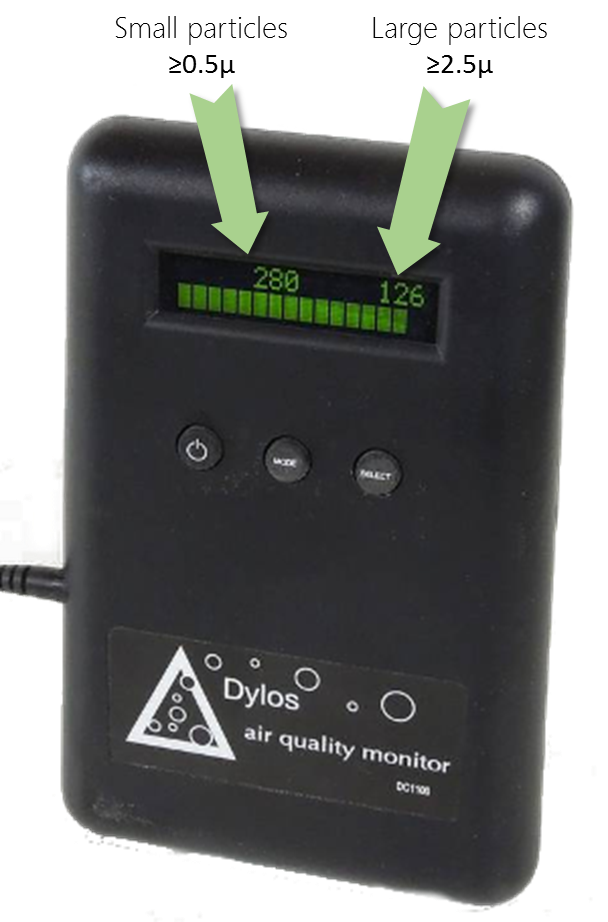
Those values are expressed in number of particules per 0.01 cubic foot (100.n/ft3), i.e. same as what is displayed on the Dylos LCD.

The Haidian Dylos station is maintained by Fred C.

Time series graphs

The following two graphs show the last 30 days data correlation for the Dylos monitor (in blue), Haidian Wanliu (海淀万柳) PM2.5 BAM monitor (in red).


Note that the comparison between Dylos and BAM readings is done for Dylos ≥ 0.5u with PM2.5 and Dylos ≥ 2.5u with PM10. You might think that comparing readings for Dylos ≥ 2.5u and PM2.5 might be more relevant, but this is actually not the case. The explanation is given in the experiment ' what is the dylos monitor actually measuring'.

Variation between stations

The next 2 graphics show the PM2.5 and PM10 raw values (in µg/m3) for different BAM stations (i.e. without the Dylos values) in Beijing, for the last 10 days. This is provided to ensure that there is not significant devitation between the various stations, especially considering that some are located on the road side, while others are in the living area.


- -

For the list of all air quality sensors, check the Sensor Overview page

Read or publish comments (they rely on Disqus)

เกี่ยวกับการตรวจวัดคุณภาพอากาศและมลพิษ:

เกี่ยวกับระดับคุณภาพอากาศ

- ค่าดัชนีคุณภาพอากาศ (AQI)ระดับความกังวลเรื่องสุขภาพ
0 - 50 ดี คุณภาพอากาศถือว่าเป็นที่น่าพอใจและมลพิษทางอากาศทำให้เกิดความเสี่ยงเพียงเล็กน้อยหรือไม่มีเลย
51 -100 ปานกลาง คุณภาพอากาศเป็นที่ยอมรับได้ อย่างไรก็ตามสำหรับสารมลพิษบางอย่างอาจต้องระวังในกลุ่มผู้ที่แพ้ฝุ่นละอองและสารเคมีได้ง่าย
101-150 ไม่ดีต่อสุขภาพ สำหรับ กลุ่มที่ไวต่อมลพิษทางอากาศ หรือกลุ่มที่แพ้อากาศง่าย อาจมีผลกระทบต่อสุขภาพของประชาชนกลุ่มเสี่ยง ส่วนประชาชนทั่วไปอาจไม่ได้รับผลกระทบ
151-200 มีผลกระทบต่อสุขภาพ เราทุกคนอาจเริ่มรู้สึกถึงผลกระทบต่อสุขภาพ กลุ่มคนที่มีความเสี่ยงสูงอาจได้รับผลกระทบด้านสุขภาพที่รุนแรงขึ้น
201-300 อันตรายต่อสุขภาพเป็นอย่างมาก คำเตือนด้านสุขภาพในภาวะฉุกเฉิน ประชากรทั้งหมดมีแนวโน้มที่จะได้รับผลกระทบมากขึ้น
300+ เสี่ยงอันตราย การแจ้งเตือนด้านสุขภาพ: ทุกคนอาจได้รับผลกระทบด้านสุขภาพที่รุนแรงขึ้น

หากต้องการทราบข้อมูลเพิ่มเติมเกี่ยวกับคุณภาพอากาศและมลพิษ โปรดดู หัวข้อคุณภาพอากาศในวิกิพีเดีย หรือ คู่มือ airnow เกี่ยวกับคุณภาพอากาศและสุขภาพของคุณ

หากต้องการคำแนะนำด้านสุขภาพที่เป็นประโยชน์มากของแพทย์ปักกิ่ง Richard Saint Cyr MD โปรดดูบล็อกที่ www.myhealthbeijing.com


ประกาศเกี่ยวกับการใช้งาน: ข้อมูลคุณภาพอากาศทั้งหมดอาจจะยังไม่ได้รับการตรวจสอบในขณะที่มีการเผยแพร่และเนื่องจากการตรวจสอบข้อมูลเหล่านี้อาจได้รับการแก้ไขโดยไม่ต้องแจ้งให้ทราบได้ตลอดเวลา โครงการ World Air Quality Index ได้ระมัดระวังเรื่องความเหมาะสมในการรวบรวมเนื้อหาของข้อมูลนี้และภายใต้การควบคุมของทีมงานโครงการWorld Air Quality Indexหรือตัวแทนของโครงการจะรับผิดชอบต่อการทำสัญญาละเมิดหรืออื่น ๆ สำหรับการสูญเสียการบาดเจ็บหรือความเสียหายที่เกิดขึ้นโดยตรงหรือโดยอ้อมจากการจัดหาข้อมูลนี้


Settings


Language Settings:


Temperature unit:
Celsius